
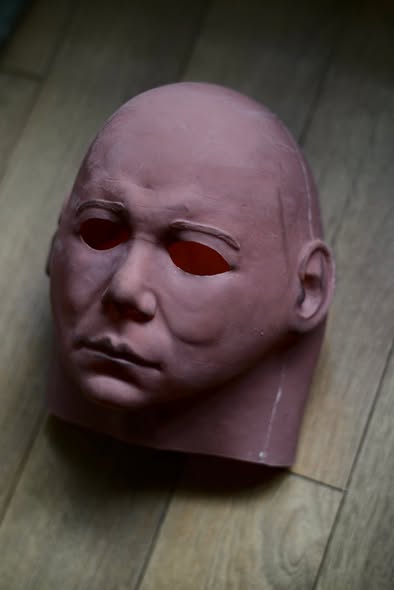
Dark Labs is Simon Edwards' UK-based horror mask and bust work. The finished pieces might be collector masks, blanks, display busts or prop-style shelf pieces, but the important decisions start much earlier on the bench.
A handmade horror mask has to read from across the room before the fine surface detail matters. The brow, cheeks, mouth, neck and overall head shape are blocked first so the piece has the right attitude in silhouette. If that foundation is weak, paint and hair will not fix it later.
Starting with the sculpt
The early clay stage is about proportion and presence. Simon works the larger forms until the face carries the character: the slope of the brow, the tension around the mouth, the angle of the cheeks and the way the mask sits as an object rather than a flat front view.
For a slasher-style collector mask, small changes can shift the whole expression. A deeper shadow under the brow, a slightly uneven mouth line or a sharper cheek break can make the sculpt feel more alive without overworking it.
Surface, shape and character
Once the main forms are working, the surface is refined. This is where skin texture, soft breaks, scars, asymmetry and age start to support the character instead of sitting on top as decoration.
The goal is not just a smooth blank. The blank needs enough information for the finish to respond to: places where paint can catch, areas that can be softened, and features that still hold up after casting and finishing.
From blank to finished piece
A Dark Labs piece may leave the bench as an unpainted blank for a collector or finisher, or it may be completed as a finished display mask with paint, hair and weathering handled individually. Either way, the clay stage determines the character of the final object.
Current Dark Labs work is shared through Facebook and Instagram, with shop links through darklabs78 on eBay and DarkLabs78 on Etsy when pieces are ready.